Pigeons Use Magnetic Immune Cells to Find Their Way on Cloudy Days
- Dr. Jainu Ajit

- 9 hours ago
- 1 min read


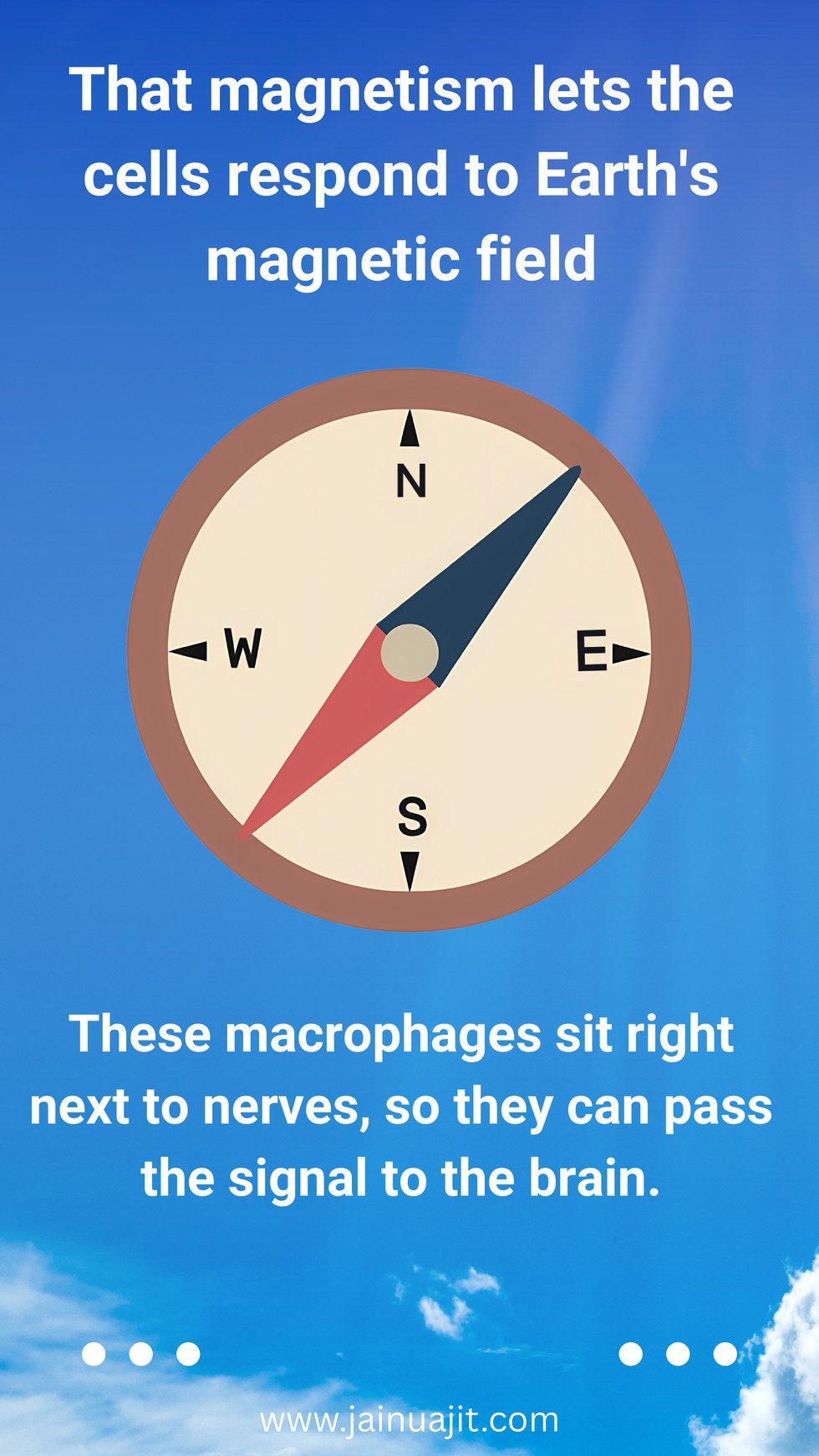


A new study in Science found that immune cells called macrophages in the pigeon liver become magnetic. Macrophages eat up old red blood cells, break them down, and accumulate so much iron that the cell itself starts behaving like tiny magnets.
Homing pigeons can find their way home even when the sky is cloudy and the sun is no longer visible as a navigational cue. Scientists have long suspected that pigeons can sense Earth’s magnetic field, but exactly how they do so has remained a mystery.
In the new study, researchers found a particularly strong magnetic response in macrophages in pigeons’ livers. These cells were also located near nerve fibers, suggesting a possible route for signals to reach the brain.
The experiment: The researchers temporarily depleted these macrophages and released pigeons nearly 20 km from home. On sunny days, the birds still navigated successfully. But on overcast days, they lost their sense of direction.
There is still more to understand. We do not yet know exactly how the cells detect Earth’s relatively weak magnetic field, how the brain interprets the signal, or whether pigeons may rely on more than one magnetic-sensing mechanism.
But the idea itself is fascinating! Cells we usually think of as part of the immune system may also help an animal sense its environment in an entirely unexpected way.
Which raises an even bigger question: how many other biological “superpowers” are hidden in cells we thought we already understood?
Link to the original paper: https://www.science.org/doi/10.1126/science.ady2486

Comments